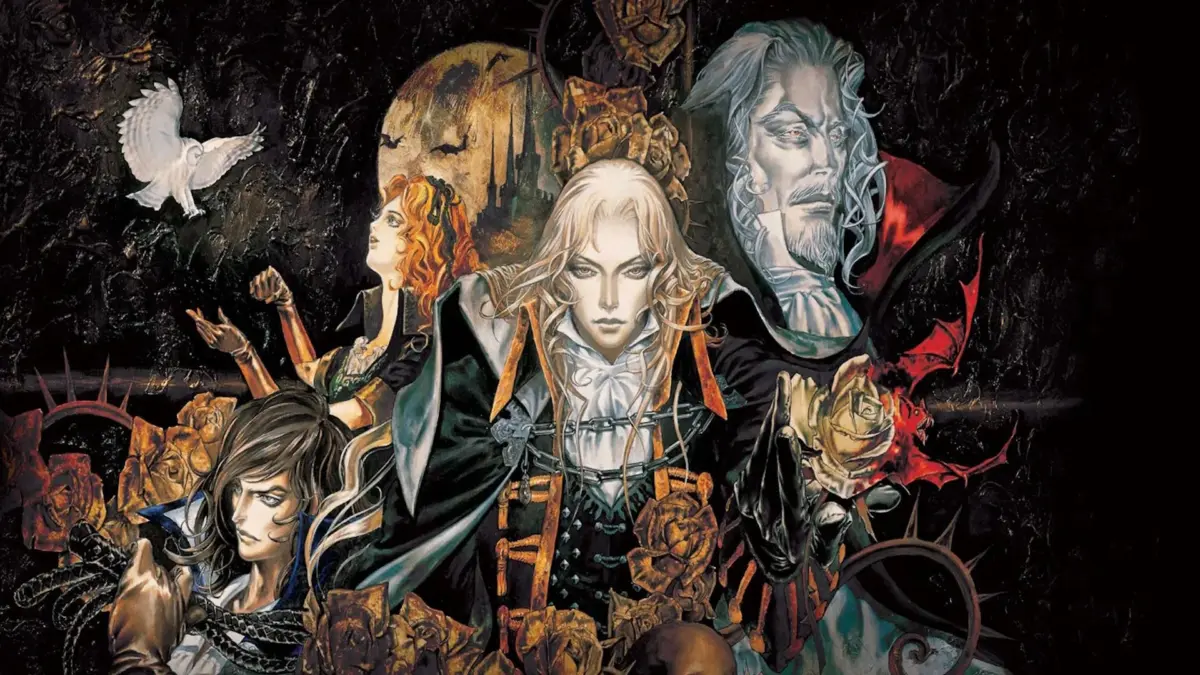
For nearly four decades, Konami’s Castlevania franchise has stood as a monumental pillar of interactive entertainment. Born in the twilight years of the 8-bit era, the series carved out an enduring legacy built on tight, challenging platforming, unforgettable gothic architecture, and a rich tapestry of lore centered on the eternal struggle between the Belmont bloodline and the dark forces of Count Dracula.
Following a grueling 13-year hiatus that left fans wondering if the legendary vampire-hunting franchise had been consigned to the crypts forever, the series triumphantly returned with the release of Castlevania: Belmont’s Curse. This long-awaited revival served as a stark reminder of the franchise’s historical weight and cultural footprint.
With dozens of entries spanning multiple generations of hardware—ranging from linear arcade-style action platforms to expansive, exploratory "Metroidvania" masterpieces—diving back into the series can be a daunting endeavor for newcomers and returning veterans alike. To provide a definitive roadmap through the gothic darkness, this retrospective examines and ranks the eight greatest entries in Castlevania history, charting the evolution of a genre-defining franchise that refuses to stay dead.
Detailed Chronology: A Legacy Carved in Stone and Blood
To understand the enduring brilliance of Castlevania, one must traverse its multifaceted evolutionary timeline. From the rigid 8-bit cartridges of the late 1980s to the lush 2.5D landscapes of the modern era, Konami’s masterwork has continually redefined what side-scrolling action games can achieve.
8. Super Castlevania IV (1991)
When the Super Nintendo Entertainment System arrived on store shelves, it needed killer apps to convince skeptical consumers to embrace the 16-bit generation. Konami answered the call with Super Castlevania IV, a masterclass in atmosphere and control that reimagined the original 1986 adventure.
Simon Belmont’s debut on Nintendo’s new hardware introduced revolutionary mechanics, most notably the ability to crack the iconic Vampire Killer whip in eight distinct directions, even while airborne. Players could also use the whip as a defensive shield or a grappling hook to swing across perilous chasms. Capitalizing on the SNES’s hardware capabilities, the game utilized Mode 7 rotation effects and multi-layered parallax scrolling to bring its damp, foreboding dungeons and sprawling exterior courtyards to life. For players seeking a classic yet approachable starting point, Super Castlevania IV remains an absolute essential.
7. Castlevania: Bloodlines (1994)
While Nintendo systems traditionally received the lion’s share of attention, the Sega Genesis got its own bespoke, blood-soaked masterpiece in Castlevania: Bloodlines. Taking a sharp narrative departure from the traditional timeline, the game set its dark fantasy narrative during the geopolitical turmoil of World War I.
Players could choose between two distinct protagonists: John Morris, wielding a traditional whip, or Eric Lecarde, who brandished an ornate battle spear. Eric’s spear added a brilliant verticality and tactical layer to the gameplay, allowing him to vault into alternate routes inaccessible to John. Complemented by a blistering, high-tempo soundtrack composed by Michiru Yamane—who would later define the aural landscape of Symphony of the Night—and punctuated by Genesis-specific graphical warping tricks, Bloodlines stands as a ferocious, high-octane triumph of the 16-bit era.
6. Castlevania Chronicles (1993)
Originally developed for the high-end Sharp X68000 personal computer in Japan before receiving an updated PlayStation port later in the decade, Castlevania Chronicles is a fascinating curio that preserves the uncompromising purity of classical Castlevania design. Serving as a reimagining of the original 1986 title, Chronicles dialed the difficulty up to eleven, offering some of the most punishing, razor-sharp platforming challenges the franchise has ever seen.
Though punishingly difficult, the PlayStation version refined the audiovisual presentation to cinematic heights while maintaining the deliberate, tactical movement that defined early vampire hunting. It remains the definitive way to experience Simon Belmont’s foundational nightmare exactly as its creators intended.
5. Castlevania: Rondo of Blood (1993)
For years, Castlevania: Rondo of Blood held mythical status among Western gamers, trapped as a Japan-exclusive release on the PC Engine CD-ROM² system. Its absence from North American and European markets for over a decade created a void that the compromised Super Nintendo spin-off, Dracula X, could never quite fill.
When Rondo of Blood finally made its way to Western audiences via the PlayStation Portable in 2007, players discovered a masterpiece. Starring the legendary Richter Belmont and featuring branching stage paths, hidden rescue objectives, and a secondary playable character in Maria Renard, Rondo of Blood perfected traditional linear action-platforming. Its stunning sprite work, dramatic CD-quality audio, and pivotal narrative placement as the direct narrative prologue to Symphony of the Night cement its legendary status.
4. Castlevania: Aria of Sorrow (2003)
Released on the diminutive Game Boy Advance, Castlevania: Aria of Sorrow proved that grand, sprawling design needed neither massive optical discs nor high-end consoles to succeed. Set in the far-flung future of 2035 during a solar eclipse, the game cast players as Soma Cruz, a young transfer student trapped inside Dracula’s resurrected castle.
Aria of Sorrow introduced the brilliant "Tactical Soul" system, allowing Soma to absorb the souls of defeated enemies to acquire new offensive spells, defensive shields, and passive mobility upgrades. This mechanical innovation gave the game an unprecedented degree of customization and depth, wrapping an intricate, lore-heavy narrative in gorgeous, pixel-art fidelity.
3. Castlevania III: Dracula’s Curse (1989)
The 8-bit Nintendo Entertainment System era was foundational for the industry, but early installments like the original Castlevania often suffered from rigid mechanics and uneven difficulty spikes, while Castlevania II: Simon’s Quest alienated players with cryptic, non-linear progression.
Castlevania III: Dracula’s Curse completely revolutionized the NES lineup by taking the best elements of its predecessors and perfecting them. It introduced multiple playable characters—including the pirate Grant Danasty, the speaker-magician Sypha Belnades, and the dhampir Alucard—each boasting completely unique playstyles and traversal abilities. Combined with branching narrative paths, memorable stage layouts, and an incredible chiptune soundtrack that pushed the NES sound chip to its absolute limits, Dracula’s Curse set the narrative blueprint that later inspired critically acclaimed adaptations, including Netflix’s acclaimed animated series.
2. Castlevania: Belmont’s Curse (2026)
Marking the triumphant return of the franchise after a 13-year hiatus, Castlevania: Belmont’s Curse arrived as a revelation for long-time devotees. Developed with a deep reverence for the series’ history while fearlessly charting a modern course, the game successfully bridges the gap between classic action-platforming and exploratory progression.
Utilizing striking 2.5D visual aesthetics, Belmont’s Curse grants every environment a rich sense of depth while executing the satisfying, fluid movement and Metroidvania-style mapping that fans have cherished since the late 1990s. Bolstered by responsive combat mechanics, a haunting soundtrack, and a fresh protagonist, it instantly stakes its claim as one of the finest entries in the franchise’s storied history.
1. Castlevania: Symphony of the Night (1997)
Nearly three decades after its initial launch on the original PlayStation, Castlevania: Symphony of the Night remains undisputed as the uncontested pinnacle of the franchise—and arguably of the entire Metroidvania genre.
Stepping into the leather boots of Alucard, players explored a sprawling, interconnected gothic castle teeming with secret passages, RPG statistics, equipment management, and terrifying monstrosities. However, the game’s masterstroke arrived midway through the journey: upon discovering a hidden truth through holy spectacles, players unlocked an inverted, pitch-flipped version of the entire castle. This staggering design twist effectively doubled the scope of the adventure, proving that Konami had created a living, breathing work of interactive art that has yet to be surpassed.
Supporting Context & Metrics: The Evolution of a Genre
The enduring impact of Castlevania extends far beyond individual software sales; it birthed an entire sub-genre of video games. Alongside Nintendo’s Super Metroid, the release of Symphony of the Night created the portmanteau "Metroidvania," a design philosophy characterized by expansive 2D maps, backtracking unlocked by new mobility powers, and light role-playing elements.
Metric / Milestone
Detail
First Release
Castlevania (September 26, 1986)
Longest Hiatus
13 Years (2013 Lords of Shadow 2 to 2026 Belmont’s Curse)
Pivotal Shift
Introduction of RPG mechanics and exploratory maps in Symphony of the Night (1997)
Primary Platforms Featured
NES, SNES, Sega Genesis, PlayStation, Game Boy Advance, Nintendo Switch, PC, Xbox One
Throughout its history, the franchise has transitioned from standalone 8-bit stage-clearing challenges to deep, systemic role-playing experiences. This evolution has been lovingly preserved for modern audiences through various multi-platform compilations, including the Castlevania Anniversary Collection and the Castlevania Advance Collection, ensuring that successive generations of gamers can experience the meticulous craftsmanship of Konami’s legendary developers.
Official Statements: Respecting the Past While Chasing the Future
The critical reception surrounding the franchise’s recent resurgence highlights a delicate balance between honoring historical legacy and innovating for contemporary platforms. Speaking on the design philosophy behind modern entries, industry developers and critics alike have emphasized the necessity of maintaining core mechanical integrity.
"Castlevania: Belmont’s Curse respects the series’ history while mapping out a potential future we hope the developers will one day realize with follow-up titles. The 2.5D visuals give each area a new sense of depth, while enabling the satisfying Metroidvania mechanics players have enjoyed since Symphony of the Night changed the franchise forever." — Gaming Retrospective Analysis
Furthermore, Konami’s continued willingness to bundle, remaster, and revisit classic iterations signals an institutional awareness of the franchise’s cultural weight. By ensuring that historical cornerstones like Rondo of Blood, Aria of Sorrow, and Super Castlevania IV remain accessible on contemporary hardware via digital storefronts and curated collections, the publisher has safeguarded the historical lineage of video gaming’s most famous vampire hunters.
Future Outlook: The Next Hunt Awaits
As the dust settles following the triumphant release of Castlevania: Belmont’s Curse, the gaming landscape looks remarkably bright for fans of gothic horror and intricate action-platforming. The revival of the franchise has proven beyond a shadow of a doubt that the appetite for meticulously crafted 2D and 2.5D action games has never truly waned.
With a robust catalog of timeless classics now playable on modern platforms—ranging from hybrid handhelds like the Nintendo Switch to high-powered gaming PCs—newcomers have more entry points than ever before. Whether one chooses to pick up the whip as a member of the storied Belmont family, explore the gloomy corridors of Dracula’s castle as Alucard, or hunt down monsters with Soma Cruz, the legacy of Castlevania remains eternal. As long as darkness threatens the fictional fields of Transylvania, players will undoubtedly answer the call to arms, ready to step once more into the moonlit courtyard and face the Lord of Darkness.