Executive Overview
The landscape of front-end web development is undergoing a profound structural evolution. In a bittersweet development for the global developer community, the long-running editorial column What’s !important has published its final edition directly on CSS-Tricks.com.
However, rather than marking the end of the beloved curated update series, this milestone serves as a bridge to a major revival. After a four-year hiatus, the iconic CSS-Tricks newsletter will officially relaunch on November 10th. This resurrected publication promises to deliver an expanded, hand-crafted digest of web engineering news, editorials, and code drops straight to developer inboxes.
Simultaneously, the web ecosystem is experiencing a massive wave of technological innovation. From advanced scroll effects mimicking cinematic experiences to groundbreaking CSS specifications—such as the native random() function, universal pseudo-selectors, and upcoming 2D mesh gradients—modern web design is pushing past historical boundaries.
This comprehensive report explores the final on-site edition of What’s !important, breaks down the industry-shifting technical updates featured within it, and examines what the return of the CSS-Tricks newsletter means for the future of the developer community.
Detailed Chronology: The End of an Era and the Birth of a New Format
The journey of What’s !important on CSS-Tricks has always mirrored the shifting currents of web standards. For years, the column served as a reliable lighthouse for developers navigating the complex, fast-moving waters of HTML, CSS, and JavaScript.
The Halloween Finale
In true developer fashion, the final on-site issue embraced a playful "trick or treat" ethos, delivering a healthy dose of nostalgia alongside cutting-edge technical insights. While bidding farewell to the traditional web page format for this specific column, the editorial team orchestrated a massive "swan song." This final issue was packed with deep-dive tutorials, experimental UI demos, and paradigm-shifting specification proposals that had been accumulating since the site’s recent resurrection earlier in the week.

The Four-Year Hiatus Comes to an End
The decision to bring back the CSS-Tricks newsletter after a prolonged four-year absence marks a strategic pivot in how community-driven technical content is distributed. In an era dominated by algorithmic feeds and social media fragmentation, direct-to-inbox newsletters offer a focused, distraction-free environment for deep technical reading.
The revived newsletter, launching on November 10th, aims to recapture the intimate, hand-curated spirit of early web blogging. Readers can expect:
- Hand-written editorials from top-tier front-end authors.
- Curated links to cutting-edge web platform updates.
- Exclusive code snippets and architecture breakdowns unavailable on standard social platforms.
Subscriptions are currently open, setting the stage for issue #21 and beyond to land directly in developer inboxes with regular cadence and dedicated sponsorship support.
Supporting Context & Metrics: The Technical Highlights of the Final Issue
The final on-site dispatch of What’s !important read like a wishlist for modern front-end developers. The web platform is advancing at a blistering pace, solving long-standing layout, design, and accessibility challenges with native CSS capabilities rather than heavy JavaScript frameworks.
1. Cinematic Scrolling and the GTA 6 Phenomenon
Scroll-driven animations have evolved from simple parallax gimmicks into immersive storytelling mediums. Demonstrating this shift, Rockstar Games recently deployed an exceptionally sophisticated scrolling experience for the GTA 6 official website—though notable for its incompatibility with Firefox, the design showcases the pinnacle of modern web motion architecture.
Front-end educator Kevin Powell quickly published a comprehensive walkthrough breaking down how to recreate these complex scroll dynamics. These effects underscore how far browser rendering engines have come, allowing developers to orchestrate timeline-based animations directly through CSS and modern scroll-driven APIs.
2. Modern Scrollspy Architecture with CSS
Navigation indicators have traditionally relied on heavy JavaScript Intersection Observer APIs or scroll-position listeners. Demonstrating a cleaner, more performant approach, Mojtaba Seyedi published a detailed guide on building a modern scrollspy using purely modern CSS. By shifting state observation and highlighting active navigation sections away from the main JavaScript thread, developers can drastically improve page performance and reduce script bloat.
3. Embracing Playful Imperfection: The random() Function
For years, achieving organic, hand-drawn, or imperfect layouts required generating random values via preprocessors (like Sass) or runtime JavaScript. Brecht De Ruyte showcased a series of stunning demos utilizing the emerging CSS random() function.
By embracing playful imperfection natively within the stylesheet, developers can now randomize rotations, dimensions, opacities, and offsets on the fly. This capability breathes organic life into otherwise rigid, programmatic grid systems.
4. Icons on the Web in 2026 and Beyond
Iconography implementation has long been a fragmented ecosystem involving SVG sprites, icon fonts, and inline markup. Lea Verou’s exhaustive deep-dive into implementing icons on the web outlines a streamlined future.
Verou’s analysis looks ahead to upcoming CSS features that promise to revolutionize how we handle assets, including:
- Linked Parameters: Simplifying component styling and inheritance.
- The
ident()function: Enhancing dynamic identifier generation. - Native
@mixinand@applyrules: Bringing reusable style logic natively into CSS without relying on external preprocessors. - The
@propertyshorthand: Streamlining custom property registration and type-safety.
5. Universal Pseudo-Selectors (::*)
Kilian Valkhof proposed a long-overdue addition to the CSS selector lexicon: the universal pseudo-selector (::*).
Currently, every modern web developer writes repetitive boilerplates like:
*,
::before,
::after
  box-sizing: border-box;
Because the traditional universal selector (*) targets element nodes but fails to capture pseudo-elements like ::before, ::after, ::backdrop, and ::details-content, developers must manually list out pseudo-elements. A universal pseudo-selector (::*) would dramatically simplify global style resets and ensure robust consistency across complex component trees.
6. Design Systems and Modern HTML/CSS Features
Declan Chidlow highlighted the specific HTML and CSS primitives that are currently transforming design system architecture. Standout features include:
text-box: Bringing granular control over text metrics and leading.sibling-index()andsibling-count(): Enabling reactive styling based on an element’s structural position within a parent container.@scope: Providing precise encapsulation boundaries without resorting to heavy shadow DOM overhead.@custom-media: Simplifying responsive design breakpoints across massive codebases.
7. Adaptive Textareas via Anchor Positioning
Adam Argyle demonstrated a brilliant layout trick utilizing CSS Anchor Positioning to make <textarea> elements automatically adapt their height to their content—mirroring the natural behavior of contenteditable regions. This technique eliminates the need for JavaScript auto-resize scripts, showcasing anchor positioning as perhaps the most versatile and transformative layout feature introduced to CSS in recent years.
8. Organic Wavy Dividers with random() and shape()
Temani Afif contributed another masterclass in geometric web design, illustrating how to generate organic, wavy section dividers using the combination of CSS random() and shape() functions. This approach replaces heavy SVG image assets with lightweight, infinitely scalable, and mathematically driven CSS geometry.
9. Accessibility and Color Science: This Hue Shall Pass
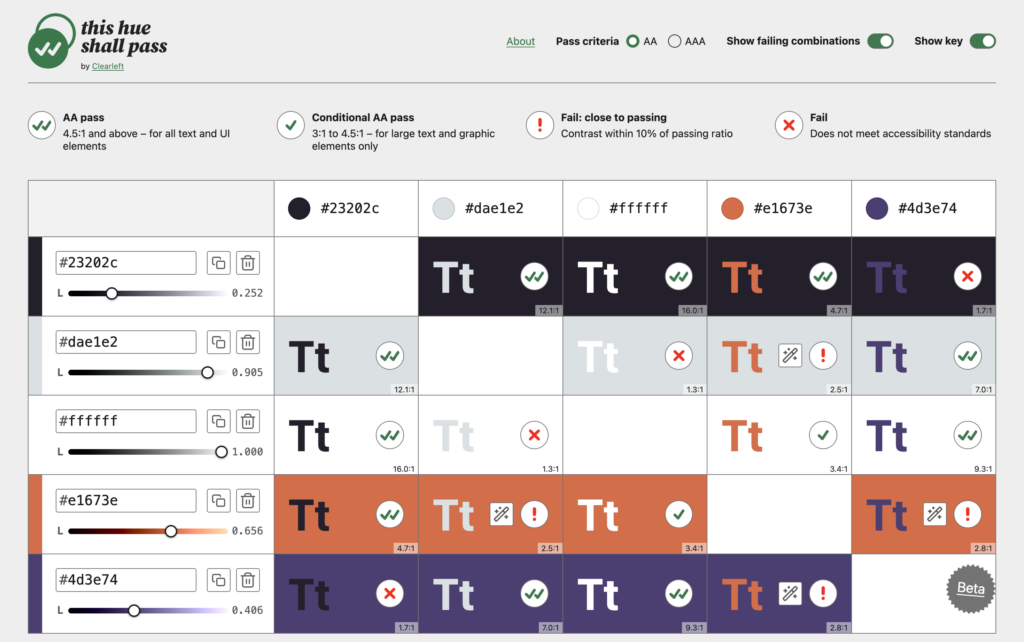
Web accessibility (a11y) remains a foundational pillar of ethical web engineering. Created by Clearleft, a new color contrast checker titled This Hue Shall Pass introduces an advanced workflow for developers and designers.

Unlike binary contrast checkers that simply return a pass/fail grade, this tool evaluates every combination in a color palette, identifies palettes that are "close to passing," and allows creators to micro-adjust lightness parameters until AA and AAA accessibility standards are fully met.
10. Visualizing Gradients and the Dawn of 2D Gradients
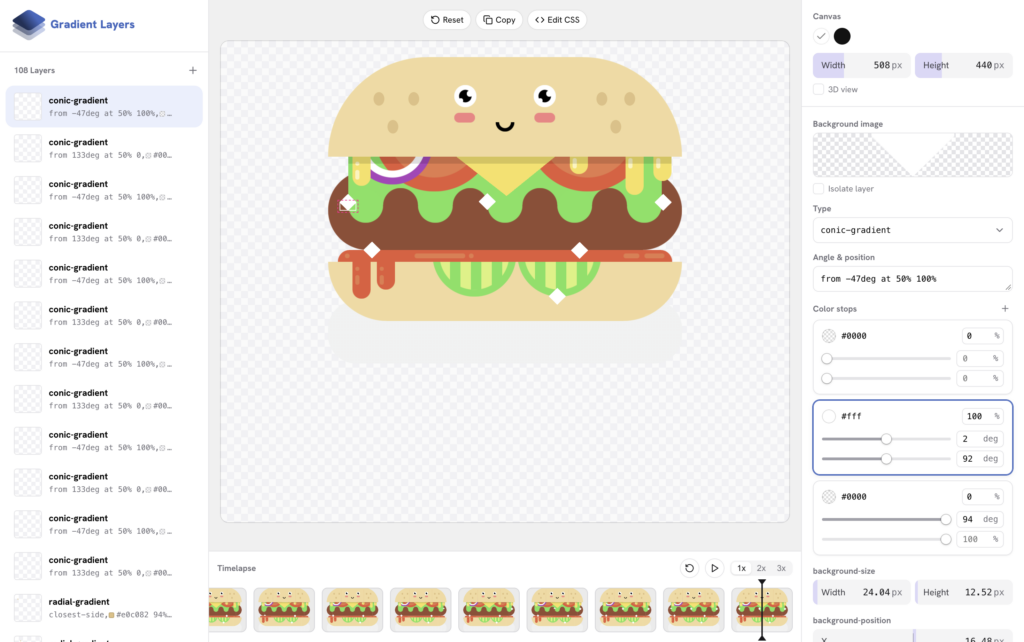
Ahmad Shadeed introduced Gradient Layers, a visual playground designed to simplify the creation and editing of complex, multi-layered CSS gradients.
Building upon this momentum, the W3C CSS Working Group has drafted specifications for two revolutionary gradient types: mesh gradients and freeform gradients. As explained by Josh Tumath, syntax proposals such as:
background-image: mesh-gradient(red, blue; green, yellow);and
background-image: freeform-gradient(red top left, yellow bottom right);will soon allow developers to render rich, multi-stop chromatic meshes natively in the browser. These tools effectively eliminate the need to export heavy raster graphics for background textures.
Official Statements and Industry Impact
The transition of What’s !important from an on-site blog column to an exclusive newsletter format reflects a broader industry trend toward community-owned, direct communication channels.

Editorial representatives emphasized that the core mission of CSS-Tricks remains unchanged: empowering developers with practical, high-impact tutorials written by industry experts. By shifting delivery to a curated newsletter model, the publication ensures that readers receive uninterrupted, high-signal technical content free from the noise of modern web algorithms.
Furthermore, community leaders have widely praised the inclusion of forward-looking CSS proposals—such as mesh gradients and universal pseudo-selectors—as proof that the CSS Working Group is actively listening to developer pain points.
Future Outlook: What Lies Ahead for Front-End Engineering
As we look toward the remainder of the decade, the trajectory of web development is defined by a shift toward native browser capabilities that once required complex JavaScript libraries or graphic design software.
The convergence of anchor positioning, native random functions, advanced scroll-driven animations, and 2D mesh gradients means that developers will soon build hyper-dynamic, visually rich experiences with significantly leaner codebases.
The return of the CSS-Tricks newsletter on November 10th arrives at the ideal moment to chronicle this renaissance. As front-end engineers grapple with new specifications, design system scaling, and accessibility mandates, having a trusted, hand-curated editorial voice delivered directly to the inbox will be more valuable than ever.
The final on-site issue of What’s !important may have closed the book on an era, but it has simultaneously thrown open the doors to a faster, more capable, and deeply expressive web platform.