ELLSWORTH, Kansas — In a state where Donald Trump has comfortably carried every presidential contest by double-digit margins since 2016, political conventions are quietly fracturing. In Ellsworth, a tight-knit community of 3,000 residents, lifelong Republicans David and Dina Dixon-Rankin recently took a step they never imagined: hammering a campaign sign into their front lawn. The candidate they are backing is not a staunch conservative, but the Rev. Adam Hamilton—a prominent Methodist megachurch pastor running for the United States Senate as a Democrat.
What is happening in Kansas is no longer a localized political anomaly; it has become one of the most closely watched narratives of the midterm cycle. Incumbent Republican Senator Roger Marshall finds himself fighting for political survival, trapped in a dead-heat race. Senator Marshall’s vulnerability is compounded by sliding approval ratings, a string of personal controversies, and widespread voter frustration over economic headwinds—including volatile beef prices, fuel costs, and sweeping health care cuts.
Yet, beneath the surface of economic grievances lies a profound cultural shift. Adam Hamilton’s campaign represents a rare, high-stakes experiment in modern American politics: a Democratic candidate who unapologetically embraces his Christian faith, quotes scripture from the pulpit, and challenges voters to connect the Gospel’s mandate for justice and charity with progressive policy objectives.
If Hamilton—along with a handful of similarly positioned faith-driven candidates in nearby states—manages to pull off an upset, it could signal a tremor in one of the most durable alignments of the last half-century: the monopoly of the religious right over heartland politics. More broadly, the race poses a critical question for the national Democratic Party: Can a radical centrist with deep roots in institutional religion provide a viable blueprint for reclaiming rural voters and bridging the cultural divide in a post-Trump era?
Detailed Chronology: On the Trail Across the Heartland
The Stumping Tour: From Salina to Hutchinson
To understand the momentum behind Hamilton’s campaign, one must experience the vast, wind-swept geography of the Sunflower State. Following the campaign trail across 900 miles of Kansas highways reveals an operation running at a relentless pace.
On a crisp autumn Thursday in Hutchinson, Kansas, Hamilton addressed a packed crowd inside the historic Fox Theatre. Donning "Republicans for Hamilton" pins, audience members listened intently as the pastor diagnosed the decay of civic discourse in Washington. In a folksy yet sharp critique, Hamilton compared modern senators to the characters in The Wizard of Oz, arguing that they had lost their minds, hearts, and courage.
He spoke directly to the exhaustion of voters caught in the crossfire of hyper-partisan animosity. Recounting the words of a constituent who begged him to be “somebody who’s going to help me not hate my neighbors with the red caps anymore,” Hamilton struck a chord that resonated deeply with the room. His style is overtly pastoral—steeped in messages of "radical love," scriptural references, and an insistence on dialogue over division.
The Theological Journey
Hamilton’s path to this unexpected political moment is as unconventional as his campaign. Raised nominally Catholic, he experienced a period of profound skepticism and atheism during his youth following his parents’ divorce and the suicide of his grandmother. A chance encounter with a missionary and a growing involvement in church life eventually redirected his path.
However, his theological education at Oral Roberts University brought acute disillusionment after the tragic deaths of his two best friends. When traditional mentors offered hollow platitudes ("Everything happens for a reason"), Hamilton turned to the writings of John Wesley, the founder of Methodism.
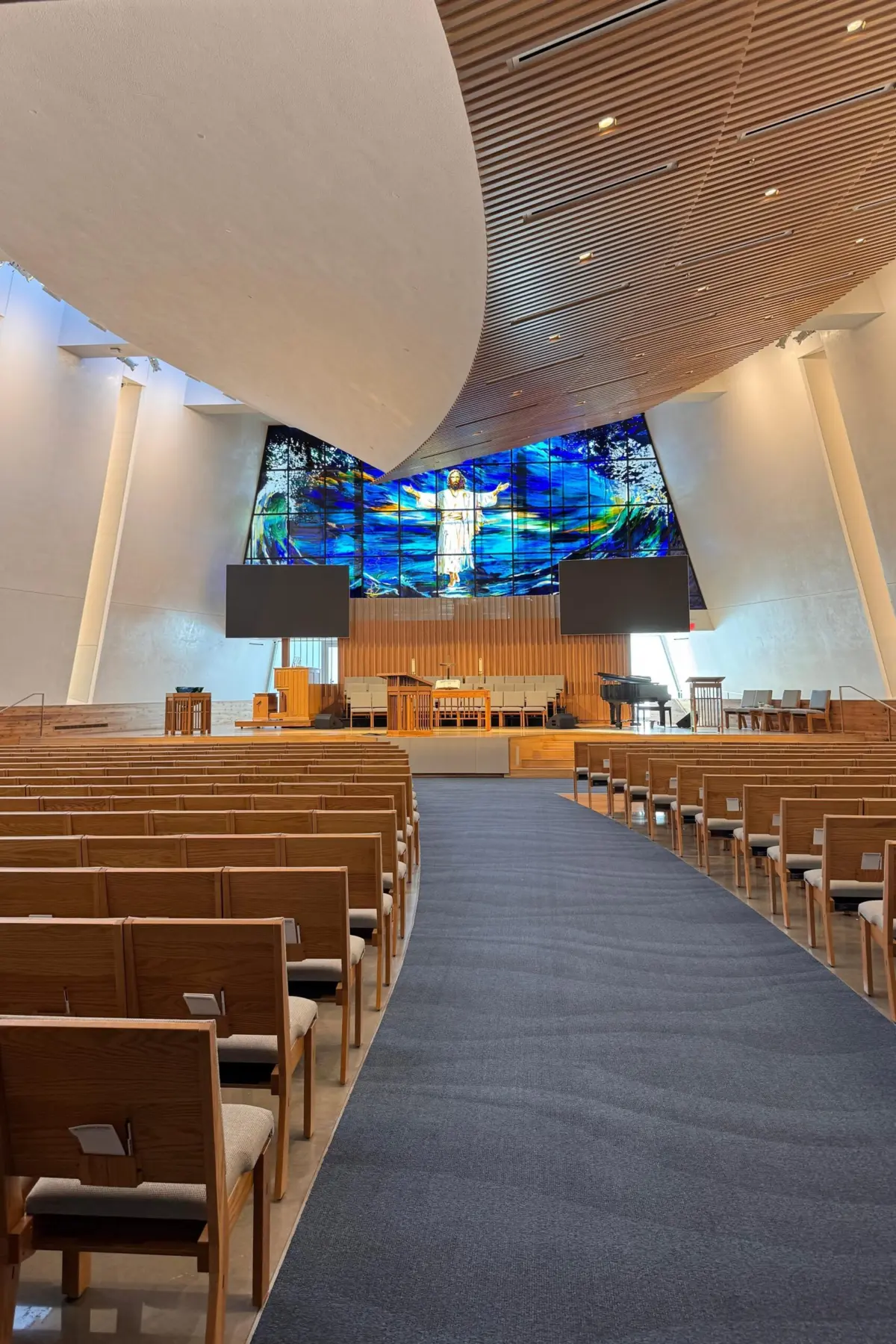
At just 25 years old, he was commissioned to plant a church "for thinking people"—one that required congregants to engage their intellect rather than check their brains at the door. What began in the chapel of a funeral home in the 1990s blossomed into the Church of the Resurrection, the largest Methodist congregation in the United States. Today, the megachurch spans multiple locations across two states, boasting roughly 24,000 members and operating as an influential institutional bedrock that shields Hamilton from routine attacks on his character and faith.
The Abortion Debate and Heterodox Views
Hamilton’s political appeal is anchored by his comfort with nuance—a stark contrast to the rigid orthodoxy demanded by political extremes. During a stop at a historic Swedish chapel in Lindsborg, a voter pressed him on reproductive rights.
Hamilton describes himself as "pro-life with a heavy heart," recounting his own mother’s agonizing near-experience with a back-alley option as a pregnant, unsupported 17-year-old. Yet, he draws a sharp distinction between his pastoral worldview and his legislative duty. Given Kansas voters’ decisive 2022 rejection of constitutional restrictions on abortion, Hamilton argues that a U.S. senator must ensure legal, safe access to care, maintaining that the government has no business making medical decisions for women facing crisis pregnancies.
This heterodox approach extends across his platform. He champions border security and the original intent of ICE, critiques far-left climate activism, voices deep concern over the national debt, and opposes socialism—all while positioning himself as an "independent-minded Democrat."
Supporting Context & Metrics: The Shifting Religious Electorate
The Realignment of Faith and Politics
For generations, Democrats could routinely rely on the bedrock support of white evangelical Protestants and mainline churchgoers. However, a seismic demographic shift took place between the 1960s and the 1990s, locking evangelicals firmly into the Republican column. As the Democratic Party grew increasingly secularized, it largely ceded religious messaging to the GOP, rendering it nearly uncompetitive in rural, faith-heavy states.
Yet data suggests that the Democratic alienation from all people of faith is a strategic error. According to religious researcher and professor Ryan Burge, while winning over white evangelicals remains an uphill battle for Democrats, a vast, underutilized reservoir of voters exists among white Catholics and mainline Protestants—members of historic denominations such as the Presbyterian, Lutheran, Episcopalian, and United Methodist churches.
Burge’s analysis indicates that these traditional denominations remain culturally potent throughout the American heartland:
Target Geographies: States like Kansas, Iowa, Nebraska, Wisconsin, and Missouri retain strong mainline traditions where a faith-centered, moderate message resonates effectively.
The "Nones" Factor: Data from the Pew Research Center indicates that atheists comprise a small fraction of the religiously unaffiliated ("nones"). The vast majority of religiously unaffiliated Americans remain open to spiritual concepts and are not universally alienated by religious rhetoric.
The Character Factor and the Marshall Vulnerability
Beyond theological messaging, the Kansas race has fundamentally turned on the question of moral integrity. The race upended in September following a landmark New York Times investigation revealing that incumbent Senator Roger Marshall—a former OB-GYN—had filed lawsuits against more than 700 former patients for unpaid medical bills, charging up to 18 percent interest and resulting in dozens of debt-collection arrests.
Combined with subsequent revelations regarding Marshall’s primary residence in Florida, unpaid campaign debts, and questions surrounding the use of public funds, the incumbent’s public image deteriorated rapidly. Polling data from CNN and local aggregators reflecting this period showed Adam Hamilton pulling ahead with some of the highest net favorability ratings among competitive Senate candidates nationwide, tapping into a broader national sentiment that Republican candidates are increasingly vulnerable on the question of personal character.
Official Statements and Counter-Offensives
The intersection of partisan politics and pastoral ministry has inevitably drawn fierce pushback from Republican leadership, transforming Hamilton’s faith into a central battleground.
The National GOP Response
In September, Vice President JD Vance launched a blistering critique of Hamilton during a rally in the Kansas City suburbs, labeling the pastor’s platform as "left-wing radicalism dressed in the skin suit of our religion." Vance accused Hamilton of insulting traditional faith to accumulate political donations, contrasting him with Senator Marshall as a "proud Christian with real faith and real principles."
President Donald Trump echoed these sentiments at a subsequent rally in Wichita, dismissing Hamilton as a "Radical Left LUNATIC Democrat" and alleging that the pastor misused church funds and mishandled historical allegations within his congregation.
Furthermore, the Marshall campaign launched television ads attacking Hamilton’s handling of decades-old misconduct allegations regarding a church volunteer, accusing the megachurch leader of institutional protectionism.
The Defense of the Pastor
The attacks on Hamilton’s ministry triggered an immediate and forceful counter-mobilization from the broader religious community. More than 100 Methodist clergy signed an open letter rebuking Vance and Marshall, writing:
"When you attack Adam’s pastoral ministry, his home congregation, and our denomination as a whole, you sow seeds of division and dissent. You tear at the fabric that is the body of Christ."
Hamilton himself has maintained a posture of steady resolve. Addressing the attacks in an interview, he noted:
"People know what I’ve stood for—they know I’m not some woke, far-left whatever. And I feel at peace about it. Still, that’s 24,000 other people in my church that you’re attacking, and you’re attacking every other mainline Christian across the state of Kansas as you’re doing that."
Future Outlook
Whether Adam Hamilton successfully flips a U.S. Senate seat in the heart of red America or falls just short, his campaign has already established a compelling case study for the future of American political strategy.
For the Democratic Party nationally, the Kansas experiment illuminates a potential roadmap for reclaiming authenticity in rural communities. It demonstrates that when candidates possess deep institutional roots, unquestioned personal integrity, and the courage to speak the native language of faith without leaning into partisan extremes, they can unlock voter coalitions previously written off as unreachable.
Ultimately, Hamilton’s improbable run suggests that the post-Trump political landscape is malleable. Voters across the spectrum are exhibiting an exhaustion with performative outrage and a profound hunger for public servants guided by authentic values. If the "Hamilton playbook" inspires a new generation of candidates of faith to step into the arena, the traditional electoral maps of the American heartland may never look the same again.