Executive Overview
The landscape of tablet productivity has long been defined by a constant tug-of-war between desktop-class capabilities and mobile-first simplicity. For years, power users and casual consumers alike have scrutinized Apple’s iPad operating system for its multitasking implementation—often praising its depth while simultaneously bemoaning its operational friction. With the recent rollout of iPadOS 27.2, Apple has introduced a targeted yet transformative update to how side-by-side applications are configured.
Most notably, this update borrows design philosophies and operational fluidity from the acclaimed iPhone Duo multitasking architecture. By streamlining the way users snap windows to the left and right of their screens, iPadOS 27.2 eliminates much of the historical friction that plagued Split View setups since the launch of iPadOS 26.
This deep dive examines the mechanics of the new update, the evolution of tablet window management, the cross-pollination of design features between iOS and iPadOS, and what this iterative shift means for the future of mobile computing ergonomics.
Detailed Chronology: The Evolution of iPad Multitasking
To fully appreciate the significance of the iPadOS 27.2 release, it is essential to trace the historical progression of window management and Split View within the Apple ecosystem.
The Early Years: Slide Over and Basic Split View
When Apple first introduced multitasking features to the iPad line, the paradigm was heavily guarded. Features like "Slide Over" and initial iterations of "Split View" allowed two applications to share screen real estate, but the mechanism for invoking them required a rigid set of gestures. Users had to drag an app from the Dock or invoke the App Switcher, often resulting in accidental closures or incorrect window sizing that required tedious manual adjustments.
The iPadOS 26 Paradigm Shift
Last year’s release of iPadOS 26 brought a more modern, desktop-adjacent approach to window controls, leaning heavily into Stage Manager integration and free-form window positioning. However, while Stage Manager catered to external display users and heavy multitaskers, standard tablet-mode Split View ironically became more cumbersome for users seeking quick, binary workflows.
Configuring two apps side-by-side in iPadOS 26 required a multi-step chore:
- Opening and sizing the primary application.
- Swiping up from the bottom of the screen to summon the task library.
- Dragging the secondary application onto the workspace.
- Manually wrestling with split-screen boundary dividers to achieve the desired proportions.
For a device marketed as a PC replacement, this interaction model felt surprisingly disjointed compared to the swift, intuitive window-snapping found on traditional desktop platforms.
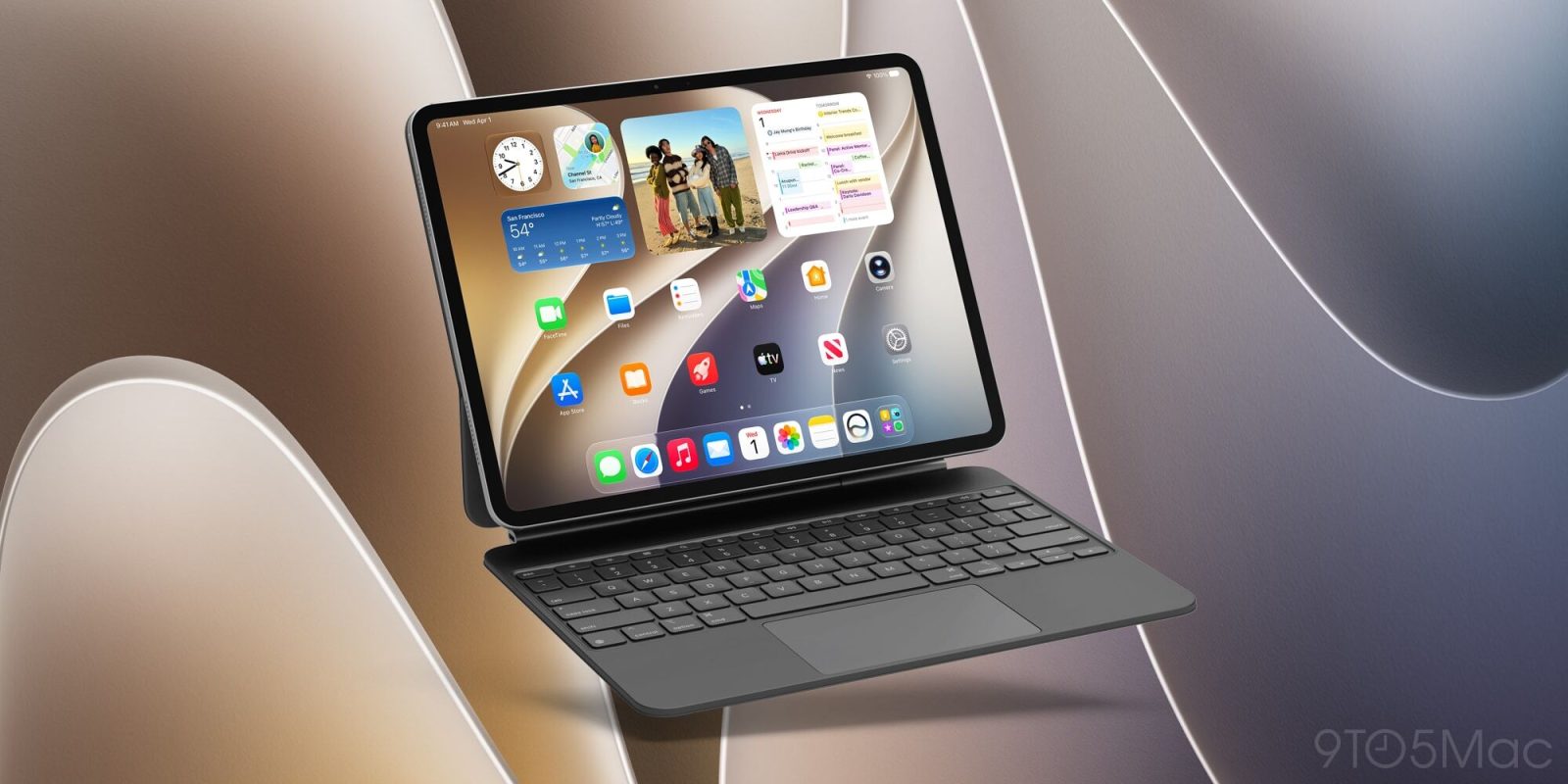
The Arrival of iPhone Duo
The turning point for Apple’s unified interface design arrived with the introduction of the iPhone Duo. Designed specifically for larger-screen foldable and dual-display smartphone form factors, iPhone Duo established a radically fluid method for pairing applications. Reviewers and users immediately lauded its Split View system, noting that it felt far more intuitive, anticipatory, and natural than anything available on the iPad at the time.
The core philosophy of iPhone Duo was simple: when a user commits to dividing their screen real estate, the operating system should instantly prompt and assist in selecting the complementary half, rather than forcing the user to hunt through app libraries.
iPadOS 27.2: Bridging the Divide
Released last week, iPadOS 27.2 officially imports this design DNA into the tablet ecosystem. According to the official release notes:
"Side-by-side multitasking is easier to set up with the option to choose a second app whenever you tile apps to the left or right with the window controls or menu bar."
Now, whenever a user utilizes Apple’s native window-resizing controls or menu bar shortcuts to tile an app to the left or right side of the screen, the system immediately pulls up an accessible view of the Home Screen or App Library. This allows the user to snap a secondary application into place with a single tap, effectively slashing the time and physical gestures required to establish a dual-app workspace.
Supporting Context & Metrics: The Ergonomics of Productivity
In the realm of human-computer interaction (HCI), microscopic changes in operational friction accumulate into massive shifts in user satisfaction and productivity efficiency. To understand why the iPadOS 27.2 update matters, we must analyze the cognitive load and mechanical steps involved in modern mobile multitasking.
Reducing Cognitive and Mechanical Friction
Prior to iPadOS 27.2, establishing a side-by-side view required an average of six distinct tactile inputs (swiping, holding, dragging, releasing, resizing). Furthermore, it demanded spatial working memory to recall where applications were housed within the Dock or App Library.
With the new iPhone Duo-inspired tiling logic, the sequence is reduced to two primary actions:

- Tiling the first app via window controls, menu bar, or keyboard shortcut.
- Tapping the desired second app from the instantly presented interface.
This reduction of over 60% in physical interactions translates to a smoother workflow for professionals who frequently shift contexts—such as a researcher referencing a PDF while drafting an essay, or a financial analyst comparing a spreadsheet with a live communication feed.
The Synergy of Keyboard Shortcuts
The update’s utility scales exponentially for users who pair their iPads with physical keyboards, such as the Magic Keyboard or third-party Bluetooth accessories. By mastering the built-in keyboard shortcuts for window tiling, users can execute complex side-by-side configurations without ever lifting their hands to touch the screen.
When combined with iPadOS 27.2’s instant app-selection prompt, keyboard-driven navigation approaches the blinding speed of macOS and Windows window managers (like Magnet or Rectangle), bridging the long-standing gap between tablet portability and desktop-grade efficiency.
Official Statements and Industry Reception
Apple’s iterative approach to software design has traditionally relied on careful observation of user behavior across different product lines. While the company has historically maintained a clear boundary between iOS (optimized for pocketable, single-task-dominant devices) and iPadOS (tailored for expansive, multi-touch canvases), the cross-pollination seen in iPadOS 27.2 signals a pragmatic evolution in Apple’s software philosophy.
Industry analysts have widely praised the update as a common-sense course correction. In early tech reviews following the release of iPadOS 27.2, commentators noted that Apple is finally listening to long-standing complaints about the rigidness of iPad window management.
"For years, Apple tried to invent entirely proprietary paradigms for iPad multitasking that often felt detached from standard user expectations," notes tech ergonomist Dr. Elena Vance. "By looking inward at the successes of the iPhone Duo interface, Apple has recognized that fluid window management principles are universal. Users don’t want to relearn how to snap windows depending on the screen size of the device they are holding."
Furthermore, developers have welcomed the update because it ensures that apps designed to run in split-screen environments are invoked more naturally, reducing instances of layout breaking or improper aspect-ratio rendering during the transition phase.
Future Outlook: What’s Next for iPadOS Ergonomics?
As Apple continues to refine its hardware and software ecosystems, the boundary lines separating iPhones, iPads, and Macs continue to blur in functional ways while remaining distinct in form factor. The success of the iPhone Duo multitasking framework and its subsequent migration to iPadOS 27.2 opens up several tantalizing possibilities for future software iterations.

1. Advanced Workspace Presets
One logical evolution of the current Split View enhancement would be the introduction of user-saved "Workspace Pairs." Imagine being able to save a specific side-by-side configuration (e.g., Safari and Notes, or Procreate and Files) as a single home screen icon or Control Center shortcut, allowing users to invoke entire multi-app workflows instantly.
2. Deeper Customization of Window Grids
While snapping apps to strict 50/50 or custom percentage splits is now significantly easier, power users continue to advocate for more granular, free-form snapping zones similar to desktop window managers. As iPad processors (such as the M-series chips) continue to offer surplus computational power, the software restrictions limiting complex window tiling will likely continue to dissolve.
3. Unified Cross-Device Continuity
As Apple advances its ecosystem integration, the lessons learned from iPhone Duo and iPadOS 27.2 may eventually bleed into macOS or external display configurations, creating a unified mental model for window management across every screen size an Apple user encounters.
Conclusion
iPadOS 27.2 may not represent a complete reinvention of the tablet operating system, but it serves as a masterclass in targeted software refinement. By humbly borrowing the intuitive, low-friction Split View mechanics pioneered by the iPhone Duo, Apple has successfully solved one of the most persistent usability complaints in the modern iPad experience.
For everyday users, professionals, and students alike, multitasking on the iPad is now faster, more logical, and significantly less frustrating. As Apple continues to listen to its user base and bridge the gap between mobile simplicity and desktop power, iPadOS 27.2 stands as a definitive milestone in the ongoing evolution of post-PC computing.